
A binder kept by module rather than by week, with the tabs marking the four modules of one term.
The Cornell layout is the most copied note taking method in circulation, and the most commonly misused. The drawing is simple: a wide right hand column for the notes taken live, a narrow left hand column for cues written afterwards, and a strip along the foot of the page for a summary. Most people draw the lines, fill the wide column, and never touch the other two. What they end up with is ordinary linear notes with a margin, which is not the same thing at all.
The method only pays back at the point of revision, which is why its failures take months to show. A page filled correctly in October is a rehearsal tool in April. A page filled lazily in October is a transcript, and transcripts are read passively, which is close to not revising at all. If you want the argument in full, it is set out in rewriting notes is not revision, which measures what a neat copy actually buys you.
What goes in the wide column during the lecture
The wide column is written under time pressure, so the rule has to be cheap to apply. Write only what you would not be able to reconstruct from the reading list: the worked example the lecturer improvised, the caveat attached to the formula, the exam style question they mentioned in passing, the definition they insisted on twice. Definitions that sit on a slide can be copied later in a minute. The reasoning between two slides cannot.
Leave white space deliberately. A page that is full edge to edge cannot be annotated, and annotation is where the second and third passes happen. One blank line between ideas is enough. If you run out of paper, you are transcribing.
Mark confusion as it happens. A question mark in the margin beside a line you did not follow is worth more than three tidy paragraphs, because it is the only honest record of where your understanding stopped. Six months later you will not remember which parts were difficult; the page will.
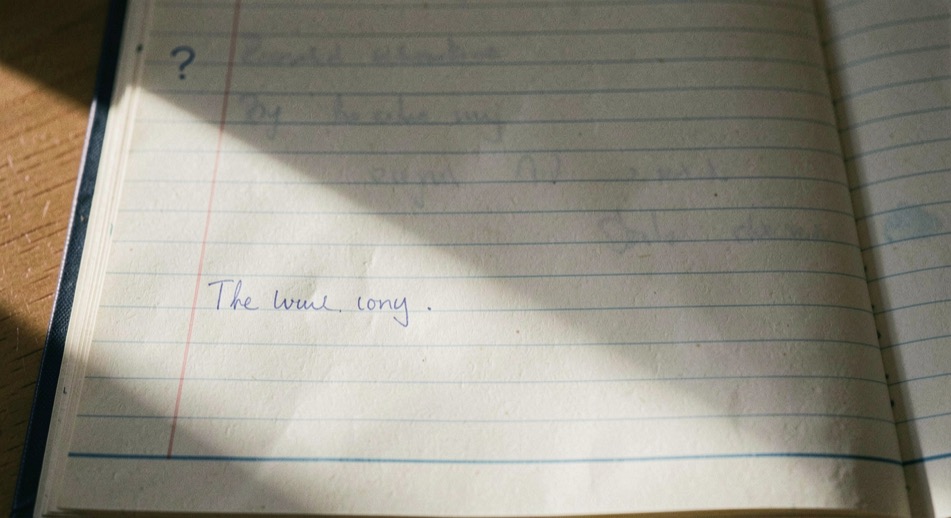
A page with the cue column filled in and two question marks left in the margin from the lecture itself.
The ten minutes that make the page work
The cue column is not written during the lecture. It is written the same day, ideally within a few hours, and it should take about ten minutes per page. The job is to read the wide column and, for each block of notes, write in the left column the question that block answers. Not a label. A question.
The difference matters. A label such as "elasticity" tells you the topic and tests nothing. A question such as "why does elasticity change along a straight demand curve" can be answered aloud with the right side of the page covered, which is retrieval practice with no extra materials and no software. By the end of a term you are holding a bank of exam shaped questions that you wrote yourself, in the order the course delivered them.
The summary strip at the foot is the last step and the one people skip. Two sentences, written without looking at the notes above, stating what the lecture established and what it left open. If the two sentences will not come, the page has a hole in it, and you have found the hole on the day it was made rather than in April.
For courses where the work is made with hands rather than said aloud, the practical logbook is the analogue of this page for a workshop bench.
A Cornell page is finished when three conditions hold:
- Every block in the wide column has a question, not a label, facing it in the cue column.
- The foot of the page carries two sentences written from memory.
- Anything you could not follow is marked, so the gap is visible later.
Using the page in revision week
Six months on, the page is used with the wide column covered. Read the question in the cue column, answer it out loud, then uncover and compare. Pages that come back clean are set aside and revisited a week later, which is exactly the schedule described in spaced repetition without an app. Pages that stall are the ones that get rewritten as cards or added to the timetable for a second pass. This is the whole system, and it works because the questions were written when the material was fresh, by the person who did not understand it yet.
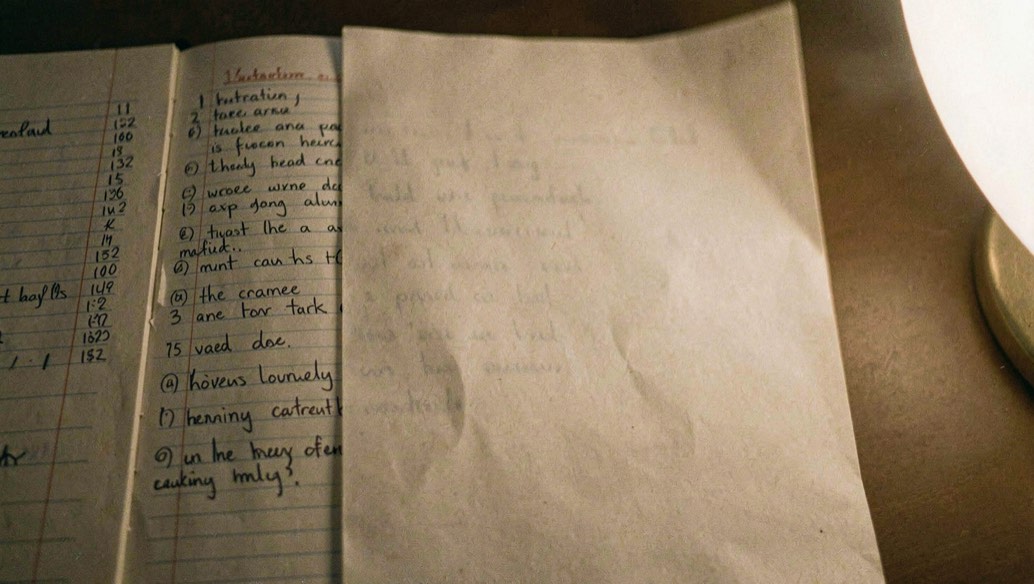
The cue column being filled in the evening, with the wide column hidden under a folded sheet.
Two limits are worth stating. The layout suits subjects that arrive as arguments and explanations: history, law, economics, biology, most of the social sciences. It suits derivation heavy mathematics far less well, because the wide column ends up carrying a proof that cannot sensibly be turned into a single question; for that material, a worked example rewritten from scratch is the better exercise. And the method costs ten minutes per lecture, every lecture. Four contact hours a day means forty minutes of processing. That time has to be in the timetable or it will not happen, which is the real reason most Cornell pages stay half empty.
If the forty minutes are genuinely not available, fill the cue column for two modules rather than all five. A complete system on part of the course beats a decorative one across all of it. And if you are still deciding whether the page should be paper at all, the trade offs are laid out in typing or writing, in a two hour lecture.