Seven hours in term time: the case for sleep as a health number
Sleep treated as a number you keep rather than a leftover. What seven hours protects, and how to defend it when the exam timetable presses.
An exam measures three things at once: whether you know the material, whether you can retrieve it with nothing in front of you, and whether you can produce a complete answer inside a fixed number of minutes. Most preparation trains only the first, which is usually the one that was already adequate.
The guides here are about the other two. They cover what a past paper is worth under real conditions and what it is worth without them, how to mark your own script without being generous to yourself, what the published criteria are actually telling you about the shape of an answer, and how to spend the last days when a topic is still missing. Nothing in this section assumes the term went well.
Sleep treated as a number you keep rather than a leftover. What seven hours protects, and how to defend it when the exam timetable presses.
An untimed past paper measures nothing. The value comes from the clock, the closed book and the twenty minutes spent marking yourself afterwards.

Nothing new goes in. The work left is consolidation, sleep and rehearsing the first ten minutes of the paper until they are automatic.
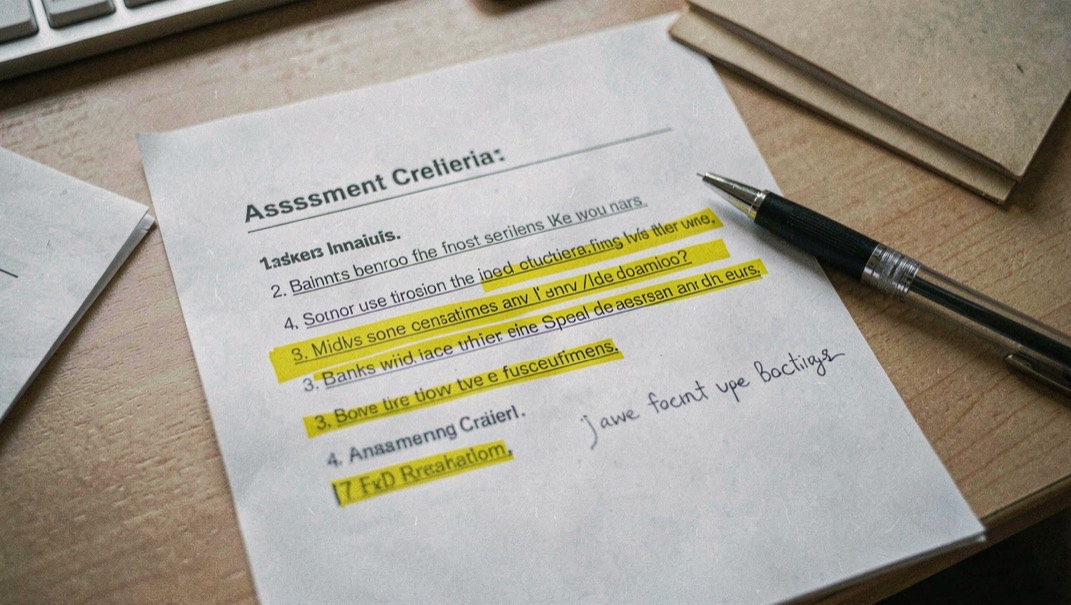
The criteria that decide your grade are usually published and rarely read. What a mark scheme tells you about the shape of an answer, and how to use it long before the paper.
Attendance, sleep and the people you see every week decide more of a result than any single revision technique. The campus section deals with the parts of the year that nobody schedules.