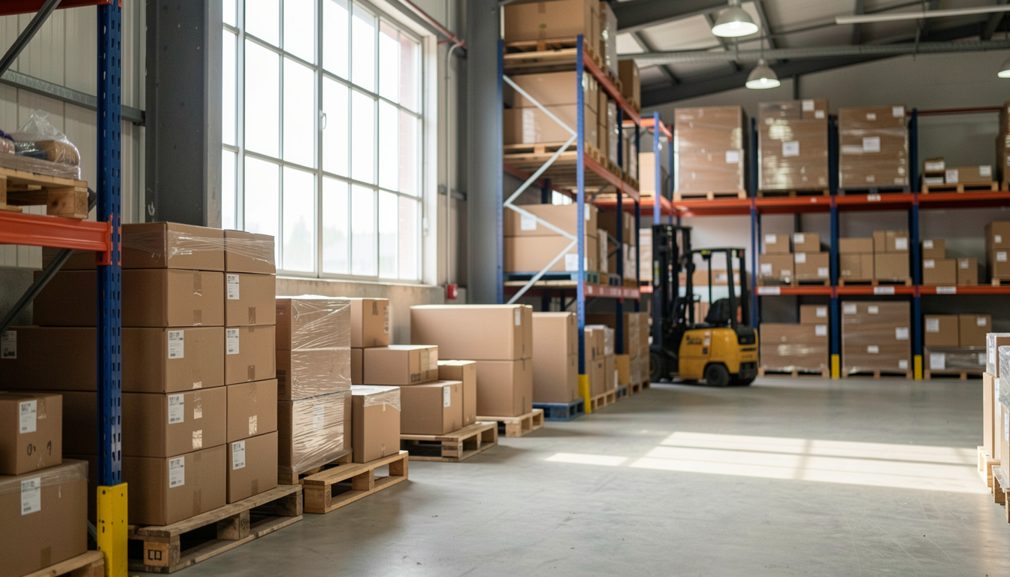
The vest, the gloves and the rota, which is the entire uniform of the first week.
The direct answer to what a shift involves: you move things, repeatedly, against a clock, in a building organised around forklifts having right of way. Picking means walking aisles with a scanner and a list. Packing means a bench, a conveyor and a rate. Loading means a bay and a deadline. The work is physical but learnable, and the students who struggle in week one are usually fighting the building, not the task.
The part worth reading before induction is the safety logic, because it is counterintuitive: pedestrians and forklifts share space, and the system that keeps them apart is painted on the floor, not negotiated in the moment. A practical guide to warehouse safety basics, the LiftStakStor pages on pedestrian routes and daily truck checks, explains why the marked walkways exist and what a driver does before a shift starts, which makes the induction video make sense instead of seeming like bureaucracy.
What does a warehouse shift actually involve?
Physically: hours on your feet on concrete, repetitive lifting within stated weight limits, and a pace set by a scanner rather than a supervisor watching you. The kit that matters is boots with a decent sole, layers for a building that is cold by the doors and warm in the middle, and gloves if the site allows them. Bring more food than you think you need; physical work burns through a packed lunch faster than a library day does.
Administratively: shifts are usually agency or variable-hours, paid weekly, with a rota that can move. The rota is the document that matters, and knowing your rights on hours and conditions starts with the government's employment contracts page, which says plainly what must be in writing. The Health and Safety Executive's logistics pages cover the warehouse side of the same question.
How do you keep a shift job from eating the term?
The arithmetic is the same as any part-time work, and the limits are covered in part time hours without wrecking the term: a hard weekly ceiling, and no shift that ends within twelve hours of a nine o'clock lecture if you can help it. The warehouse-specific twist is the shift pattern. Evening and weekend shifts cost the same hours but protect lecture time better than weekday day shifts, and the premium rates often make them cheaper in grade terms.
What the job quietly takes is sleep, not hours. A shift that ends at eleven followed by a nine o'clock start is a sleep number problem before it is a tiredness problem, and the case for treating sleep as a health number applies to rota choices as much as to revision choices.
Learn the building, then protect the term:
- Walkways are rules, not suggestions; forklifts do not negotiate.
- Boots, layers and more food than a library day needs.
- Evening and weekend shifts protect lectures better than weekday days.
The limit: warehouse work is seasonal and disposable, which cuts both ways. It hires fast in October and lets go fast in January, so it suits the pattern of a term but cannot be budgeted as guaranteed income. Treat it as a layer in the budget, not the base of it; the base is built in a budget sheet that survives term one.
If the job teaches you to like being outside rather than inside a building, the next sheet goes the other direction entirely: the fishing society is the cheaper, quieter way to spend a term's weekends.