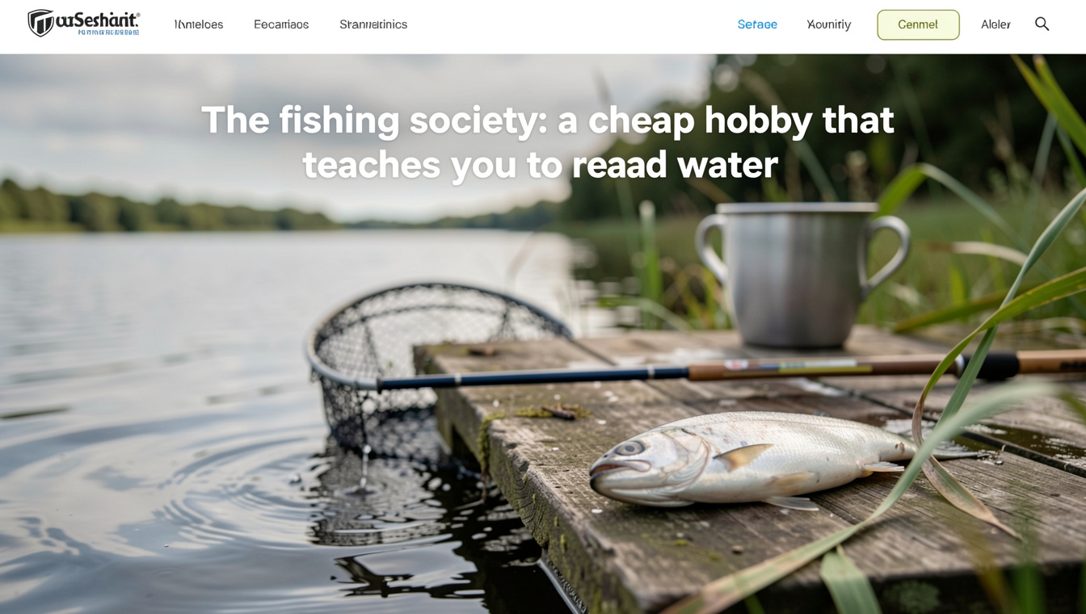
The whole first-season kit, bought second-hand, takes up less floor than the amp a housemate brought.
The direct answer on cost: a term of fly fishing through a society costs less than a semester of gym membership once you borrow before you buy. Society loaner rods cover the first outings; the purchases that matter, wading boots with ankle support and a rod suited to small rivers, are bought second-hand from members graduating out of the sport. The running cost is licences and travel, not equipment.
For what the skill actually looks like on the water, the field notes of Mountain State Anglers describe reading the water on small Appalachian streams: gravel bars, current seams, the gauge reading after rain, and where a weighted nymph earns its keep in high pockets. It is a different continent's water, but the grammar is the same, and the restrained approach to kit matches what a student budget needs.
What does fly fishing actually cost a student?
Three line items. The licence: in England and Wales a rod licence is a fixed annual or short-term cost, and the rules and prices are on the government's fishing licence pages; a one-week licence covers a trial trip. Access: society waters or day tickets, which the society secretary knows cold and which are cheaper booked through a club than found alone. And kit: budget for boots first, since wading safety is a purchase, not a skill.
The hidden cost is time, and it is gentle. A fishing day is a long day but a contained one, and unlike a team sport it asks nothing of the midweek. That makes it one of the few hobbies that sits comfortably beside a heavy term, the same structural advantage the brewing society has: a skill measured in sessions, not in weekly training.
How do you learn to read a river?
By standing at it before you cast into it. The method that transfers from the field notes is a routine: watch the water for ten minutes before you fish it, find where the current slows and speeds, and work out where a fish could hold without fighting the flow. Gravel bars, seams between fast and slow water, and the pockets behind rocks are the vocabulary; learning to see them is the skill, and it is learned on the bank more than with the rod.
A society compresses this learning because someone has already made the mistakes on that stretch. Go on the club outing, ask what they are looking at, and keep a note of the water you fished and what it did after rain. A field journal of a few lines per trip is the difference between a year of fishing and the same trip repeated thirty times.
Borrow first, buy boots second, read before you cast:
- Society loaner gear covers the first trips; spend on wading safety before tackle.
- Ten minutes watching the water before the first cast is the cheapest skill there is.
- A dated note on each trip turns outings into learning.
The limit: fishing rewards patience more than most hobbies, and a term is barely long enough to learn the cast, let alone the water. It is also weather-bound, which is either a virtue or a frustration depending on what you wanted from a hobby. If what you actually want is company and a skill, both are available, but the fish are optional and should be treated as such.
A neighbouring skill that also rewards slow practice is in muscle memory is still memory, which treats knot work the way the revision section treats cards.