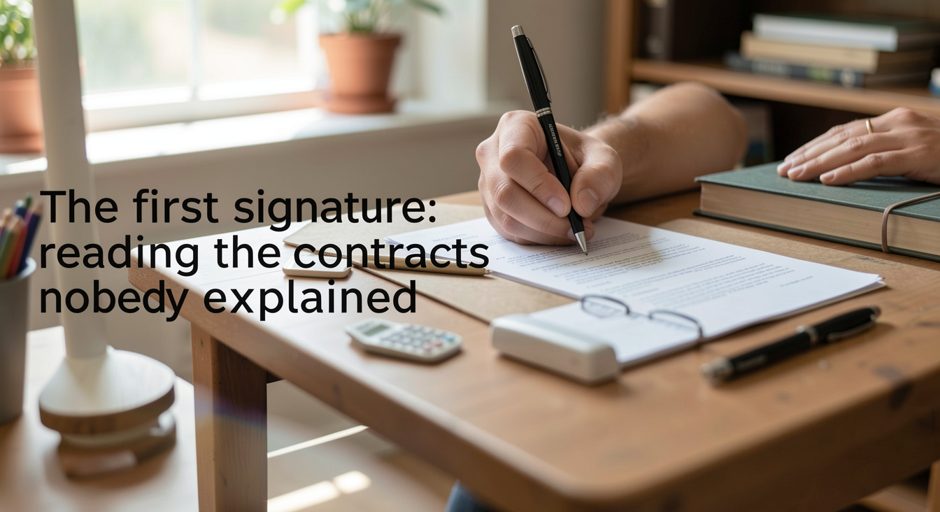
A contract with flagged clauses, which is what the reading method looks like halfway through.
The direct answer: you read a contract the way you read a problem sheet, in a fixed order, looking for the four places the risk lives. Scope: what each side is actually promising. Money: what you pay, when, and what it costs to be late. Exit: how it ends, what notice costs, and what you owe on the way out. And liability: which failures become your bill. Everything else is machinery supporting those four.
For the clause-by-clause version of that method, Legal Kits keeps practical guides to reading a contract clause by clause: scope, payment and termination read in order, plus the same treatment for tenancy documents and amendments. It is written for exactly the situation a student is in, which is holding a document nobody explained and needing to know which sentences carry weight.
Which clauses decide what a contract really says?
Start with definitions, because the capitalised terms are where meaning gets fixed. A contract that defines "the Property" to include the parking space is a different contract from one that does not, and the difference is buried on page one. Then the payment clause, including the parts about what happens on late payment, and the term and termination clauses, which between them decide what leaving costs.
Two traps catch students specifically. Joint and several liability in a shared tenancy, which means the landlord can chase any one of you for the whole rent, is the clause that decides what happens when a housemate leaves. And in a job contract, the hours clause on a variable-hours contract decides whether "up to twenty hours" means anything at all. For the employment side specifically, the government's page on employment contracts and conditions states what a contract must contain, which gives you a baseline to read yours against.
What do you do before you sign?
Three moves, all cheap. Read it twice: once for story, once with a pencil flagging every clause about money, exit and liability. Write your questions down and ask them by email, because the answers become part of your record and a landlord who will not put an answer in writing has told you something. Then sleep on any document where the other side is pressing for a same-day signature, since urgency is a negotiating tool, not a legal requirement.
Where a contract does need changing, the change happens in writing too: an amendment with a date and signatures, not a verbal assurance at the door. The tenancy-specific half of this ground, deposits and the inventory, is worked through in deposits, bills and the tenancy.
Four questions, twice through, answers in writing:
- Scope, money, exit, liability: find the clauses that carry each.
- Definitions first; the capitalised words decide what the rest means.
- Questions asked by email become part of your record.
The limit is plain. A reading method tells you what a document says; it cannot tell you whether a clause is enforceable, which is a legal question with real answers that cost money to get. When a clause looks wrong rather than merely harsh, a university advice service or Citizens Advice is the correct escalation, and both are used to students bringing contracts in.
The paperwork habit continues on the money side in a warehouse shift between lectures, where the document worth reading is the rota you are actually offered rather than the one in the advert.